Before the event · Group photo planning
How to Plan Group Photos Without Delaying Your Event
A smoother group photo starts with three decisions made before the event: who is joining and where to photograph them, when the photo will happen, and who will help cue everyone. With those agreed, the photographer can prepare and concentrate on taking the picture.
01Decide how many people will be in the photo
First, tell the photographer what kind of group photo you need. Is it a small group of around ten VIPs, or everyone attending the event? Those are very different arrangements.
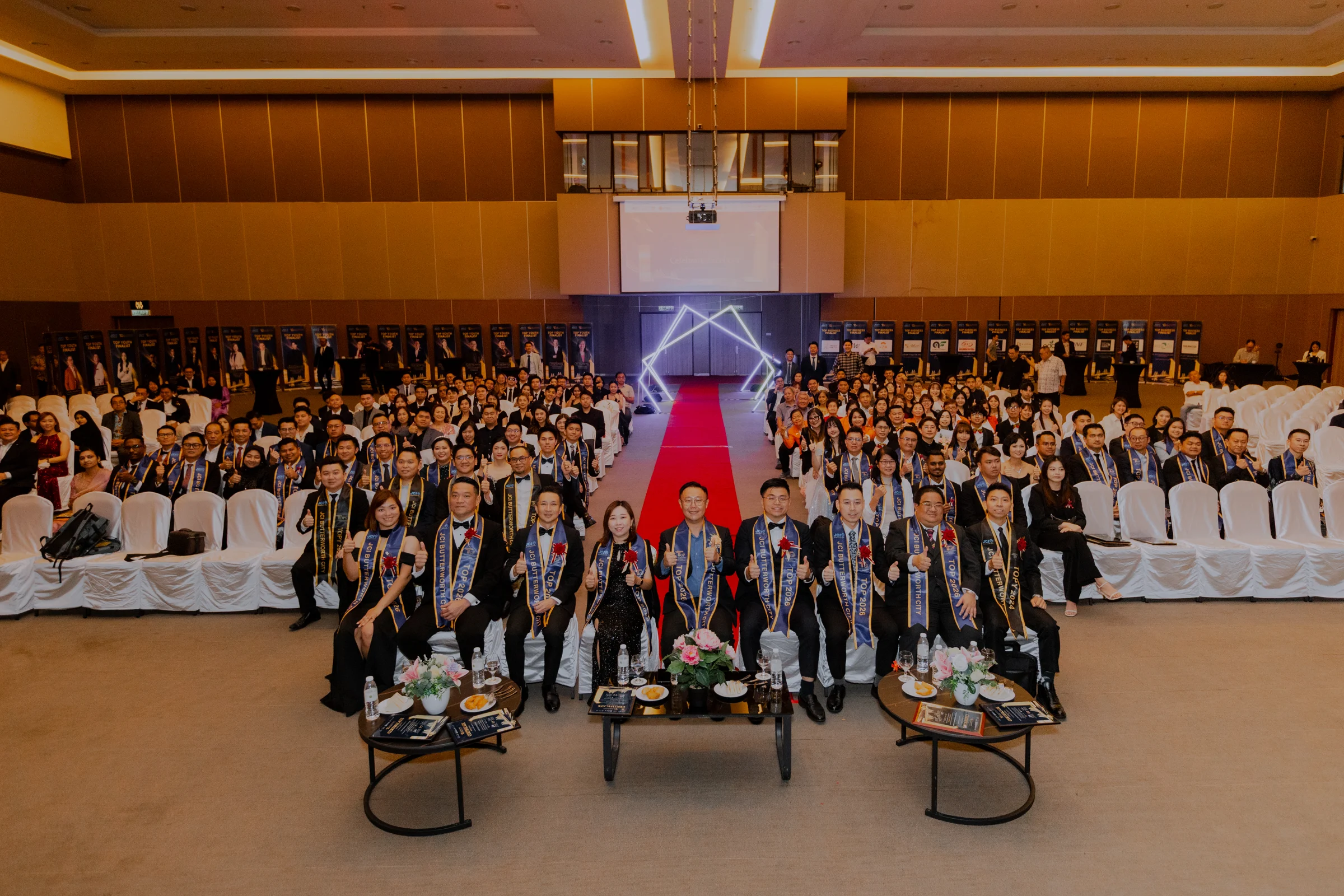
Once we understand the group size, we can suggest a suitable location and angle. A small VIP group might fit at the welcome-area backdrop. For a full-room photograph, we might suggest photographing the audience from the stage.
Discuss whether people will remain seated or stand, and whether everyone can be seen from the proposed camera position. Agreeing on this before calling the group together avoids having to make the main decisions while people wait.

02Choose the location and camera angle together
“We need a group photo” is only the beginning of the brief. The photographer also needs to know where the group will gather and where the camera can be positioned.
For a whole-room photograph, discuss the view from the stage and how the room should be arranged. For a smaller group, check the backdrop and available space. The same location will not necessarily suit every group on your list.
A clear plan lets the photographer get into position before the group is cued.
03Put the group photo into the timetable
Next, agree on the time. This gives the photographer a point in the programme to prepare for and helps the organiser keep the photograph on the schedule.
For example, a VIP group photo could happen before the event starts. A full-room photograph could be taken once the VIPs have arrived, before the main programme begins. These are options to discuss rather than a fixed sequence for every event.
What matters is that the photographer and organiser know the agreed time. If the programme changes, pass that update to the crew so the group photo can be coordinated again.
04Ask an MC or coordinator to cue the group
Assign someone to help bring the right people into the photograph. For a large gathering, the MC can use the microphone to announce who needs to join, whether everyone should stand and where they should look.
The photographer can then focus on the framing and taking the photograph while the MC or coordinator manages the group. Coordinate the countdown so people know when to look at the camera and smile.
For a smaller group, a designated organiser can help gather the participants. The important point is to have someone responsible for the cue, rather than expecting the photographer to locate every person and manage the whole room alone.

05Agree on the sequence before everyone gathers
If you need several group combinations, communicate the sequence in advance. The person making the announcements should know who is needed for each photograph.
Keep the plan simple: decide the people, location and angle; confirm the time; then appoint someone to coordinate the cue. This preparation helps the group photo move along smoothly and reduces avoidable waiting during the event.
06Plan your coverage with HeroShot
Share your event details and priorities so we can discuss the coverage you need.
Every Moment. A Hero Shot.